

If you’re planning a home, buying property, or redesigning your space, you’ve probably asked, “how many square feet should a bedroom be?”
The answer depends on several factors like comfort, legal requirements, and how you plan to use the space.
Some bedrooms are just big enough to meet minimum standards, while others are designed for luxury and relaxation. Understanding the right size helps you make smarter decisions.
Let’s break it down clearly and simply.
Quick Answer
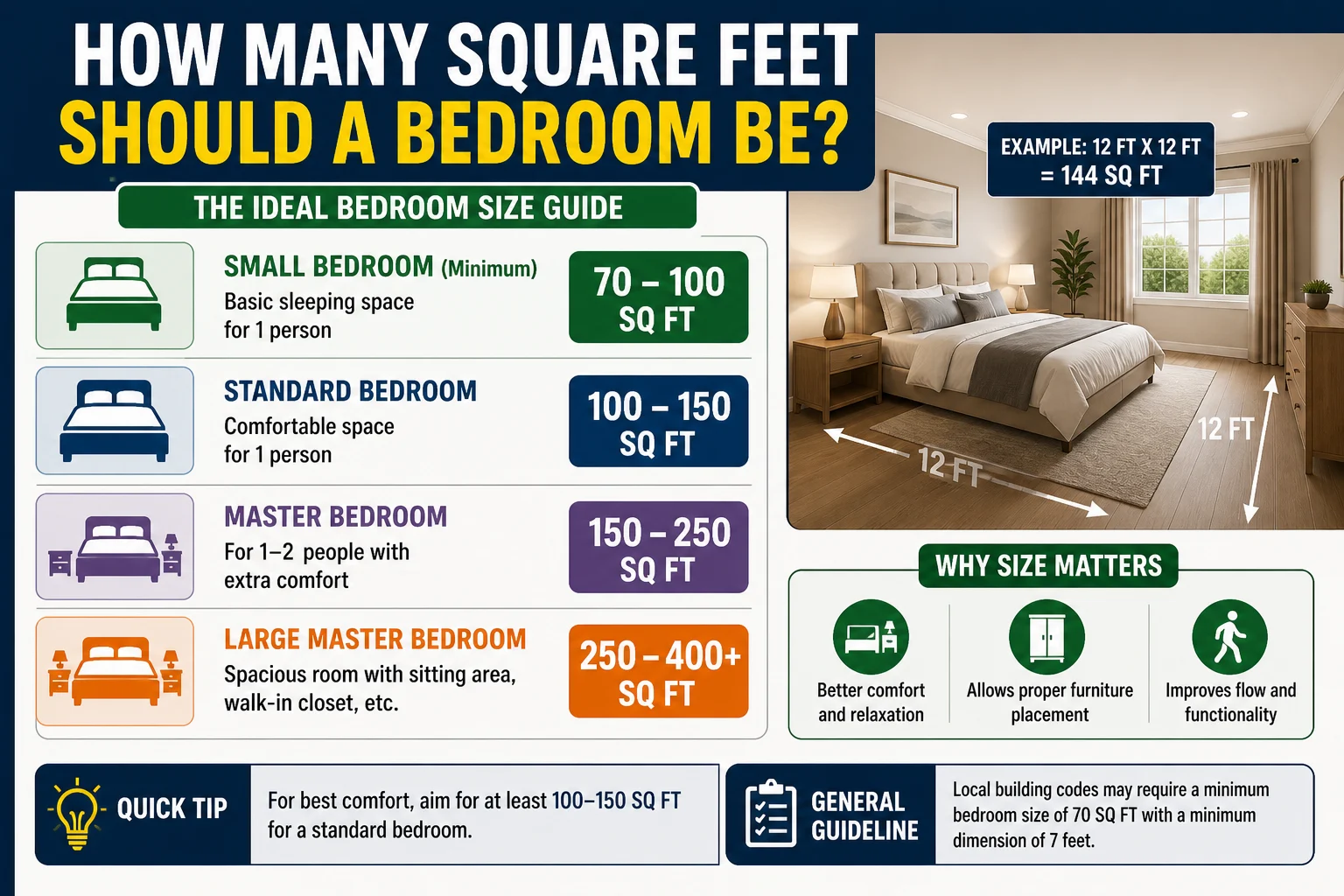
A bedroom should be at least 70 square feet to meet minimum standards, but ideally:
- Small bedroom: 70–100 sq ft
- Standard bedroom: 100–200 sq ft
- Master bedroom: 200–400+ sq ft
These ranges give you a better idea of what to expect.
Minimum Bedroom Size Requirements
Legal Standards
In many places, building codes require a bedroom to be at least:
- 70 square feet for one occupant
- At least 7 feet in one direction
For each additional person:
- Add about 50 square feet
These rules ensure safety, ventilation, and livability.
Ceiling Height Requirements
Most regulations also require:
- Minimum ceiling height of 7 feet
This ensures enough air space and comfort.
Ideal Bedroom Sizes for Comfort
While the minimum size keeps things legal, comfort requires more space.
Small Bedroom
Size: 70–100 square feet
Suitable for:
- Single bed
- Minimal furniture
Pros:
- Easy to maintain
- Lower cost
Cons:
- Limited storage
- Tight layout
Standard Bedroom
Size: 100–200 square feet
Suitable for:
- Queen bed
- Wardrobe
- Small desk
This is the most common bedroom size in modern homes.
Master Bedroom
Size: 200–400+ square feet
Suitable for:
- King-size bed
- Seating area
- Large wardrobes
This offers comfort, luxury, and flexibility.
Bedroom Size Comparison Table
Bedroom Type | Square Feet | Features
Small | 70–100 | Basic furniture
Standard | 100–200 | Comfortable layout
Master | 200–400+ | Spacious, premium
This table helps you quickly compare options.
Factors That Affect Bedroom Size
Furniture Needs
Your furniture determines how much space you need.
For example:
- King bed needs more room than a single bed
- Extra furniture like desks or sofas requires more space
Number of Occupants
A room for one person can be smaller, but shared bedrooms need more space for comfort.
Storage Space
Closets, wardrobes, and shelves all require extra square footage.
Real-World Examples
Apartment Bedrooms
In apartments, bedrooms are usually:
- 80–120 square feet
These are compact but functional.
Family Homes
Typical houses have bedrooms around:
- 120–200 square feet
This allows for comfortable living.
Luxury Homes
In high-end homes, bedrooms can exceed:
- 300–500 square feet
These often include seating areas and walk-in closets.
Common Mistakes to Avoid
Choosing size based only on minimum requirements
Ignoring furniture layout
Forgetting storage needs
Not considering future use
Tips to Make Any Bedroom Feel Bigger
Use light colors
Add mirrors
Choose multi-functional furniture
Keep clutter minimal
Use vertical storage
These tricks can make even small bedrooms feel spacious.
Expert Tips for Bedroom Planning
Always plan furniture layout before finalizing size
Leave walking space around the bed
Consider natural light and ventilation
Think long-term, not just current needs
FAQs
- How many square feet should a bedroom be at minimum?
At least 70 square feet for one person - What is the ideal bedroom size?
Around 100–200 square feet for comfort - How big should a master bedroom be?
Usually 200–400+ square feet - Can a 10×10 room be a bedroom?
Yes, it equals 100 square feet, which is standard - Is a 12×12 bedroom a good size?
Yes, it offers 144 square feet, which is comfortable
Conclusion
So, how many square feet should a bedroom be?
The simple answer is:
- Minimum: 70 square feet
- Ideal: 100–200 square feet
- Master: 200+ square feet
The right size depends on your needs, furniture, and lifestyle.
By understanding these guidelines, you can design or choose a bedroom that is not only functional but also comfortable and enjoyable to live in.