

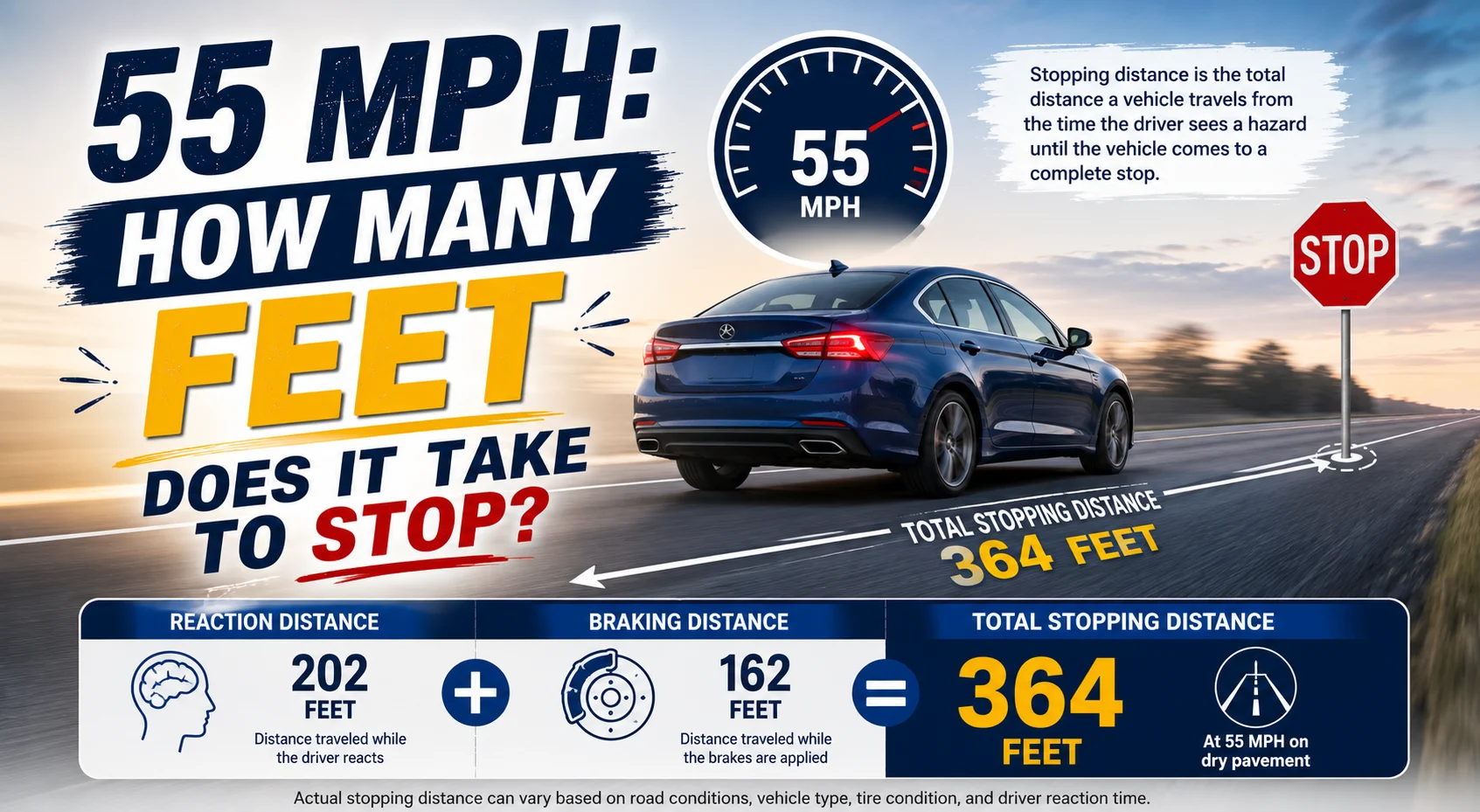
If you are studying driving safety, you may wonder: 55 mph how many feet to stop?
The average total stopping distance for a passenger vehicle traveling at 55 miles per hour is approximately:
265 to 300 feet
This distance includes:
- Driver reaction distance
- Actual braking distance
Stopping distance is one of the most important safety concepts in driving because many drivers underestimate how long it takes a vehicle to stop at highway speeds.
Even modern vehicles with strong brakes cannot stop instantly. Road conditions, weather, tire quality, and reaction time all affect stopping distance.
In this guide, you will learn how stopping distance works, how many feet it typically takes to stop at 55 mph, and what factors can increase or reduce braking performance.
Quick Answer
At 55 mph, a typical passenger vehicle needs approximately:
265 to 300 feet to stop
under normal driving conditions.
Average Total Stopping Distance
This estimate includes:
- Thinking distance
- Brake response
- Tire grip
- Vehicle deceleration
Reaction Distance vs Braking Distance
Stopping distance has two major parts:
| Type | Approximate Distance |
|---|---|
| Reaction distance | 60–75 feet |
| Braking distance | 200–225 feet |
| Total stopping distance | 265–300 feet |
Both parts are critical for safe driving.
Understanding Stopping Distance
Many people think braking alone determines stopping distance, but driver reaction time also matters.
What Is Reaction Distance?
Reaction distance is how far your vehicle travels:
- After seeing a hazard
- Before pressing the brake pedal
At 55 mph, your car continues moving quickly during this short delay.
Most drivers have a reaction time of:
- About 1.5 seconds
What Is Braking Distance?
Braking distance begins:
- Once the brakes are applied
It measures how far the vehicle travels before coming to a complete stop.
Total Stopping Distance Explained
The complete stopping distance equals:
Reaction Distance+Braking Distance=Total Stopping Distance
How Many Feet to Stop at 55 MPH?
Let’s break down the stopping process more closely.
Reaction Distance Calculation
At 55 mph, a vehicle travels approximately:
80.7 feet per second
If the driver takes about 1 second to react:
80 feet
may pass before braking even begins.
Braking Distance Calculation
Under dry conditions, braking distance at 55 mph is often around:
185 to 220 feet
depending on:
- Vehicle type
- Brake condition
- Tire grip
Total Combined Distance
Adding both distances gives approximately:
265 to 300 feet
That is nearly the length of a football field.
Stopping Distance Chart by Speed
Stopping distance increases dramatically with speed.
| Speed | Average Total Stopping Distance |
|---|---|
| 20 mph | 40 feet |
| 30 mph | 75 feet |
| 40 mph | 120 feet |
| 50 mph | 175 feet |
| 55 mph | 265–300 feet |
| 60 mph | 300+ feet |
| 70 mph | 400+ feet |
Higher speeds increase:
- Momentum
- Reaction distance
- Braking force required
Factors That Affect Stopping Distance
Many variables can increase stopping distance significantly.
Weather Conditions
Rain, snow, and ice reduce tire traction.
Wet roads may increase stopping distance by:
- 25% or more
Icy roads can multiply stopping distance several times.
Tire Quality
Worn tires reduce grip and braking efficiency.
Proper tire maintenance improves:
- Traction
- Steering control
- Emergency stopping ability
Driver Reaction Time
Fatigue, distractions, and alcohol increase reaction time.
Looking at a phone for even a few seconds can dramatically delay braking.
Vehicle Weight
Heavier vehicles generally require:
- Longer stopping distances
- Greater braking force
Large trucks need much more room to stop than passenger cars.
Why Safe Following Distance Matters
Because stopping takes hundreds of feet at highway speeds, following distance is essential.
The Three-Second Rule
Most driving instructors recommend:
- Staying at least 3 seconds behind the vehicle ahead
In poor weather:
- Increase to 4–6 seconds or more
Tailgating Risks
Following too closely reduces:
- Reaction time
- Escape space
- Collision avoidance options
Rear-end crashes often happen because drivers underestimate stopping distance.
Common Driver Mistakes at Highway Speeds
Several dangerous habits increase accident risk.
Speeding
Even small increases in speed dramatically raise stopping distance.
Distracted Driving
Texting while driving delays braking response.
At 55 mph, just 2 seconds of distraction means traveling over:
160 feet
without full attention.
Poor Vehicle Maintenance
Bad brakes and worn tires reduce stopping performance.
Overconfidence in Modern Safety Systems
ABS brakes help maintain steering control but do not eliminate stopping distance entirely.
Tips to Reduce Stopping Distance
Drivers can improve safety with a few smart habits.
Maintain Tires Properly
Check:
- Tire pressure
- Tread depth
- Alignment
regularly.
Keep Brakes in Good Condition
Brake pads and rotors wear over time.
Routine maintenance improves:
- Stopping power
- Emergency control
Stay Alert
Avoid:
- Phone use
- Fatigue
- Eating while driving
Adjust for Weather
Drive slower during:
- Rain
- Fog
- Snow
- Ice
Reduced speed dramatically shortens stopping distance.
Real-World Perspective
To visualize 300 feet:
- It is about the length of a football field without end zones
- Longer than many highway entrance ramps
- Far more than most drivers expect
This explains why sudden braking at highway speeds can be dangerous.
Why Stopping Distance Increases So Fast
Stopping distance does not increase evenly with speed.
As speed rises:
- Momentum increases rapidly
- Brakes work harder
- Tires generate more heat
Doubling speed more than doubles braking distance.
FAQs
How many feet does it take to stop at 55 mph?
Most passenger vehicles need about 265 to 300 feet to stop at 55 mph.
What affects stopping distance the most?
Speed, reaction time, road conditions, and tire quality all strongly affect stopping distance.
How far do you travel in one second at 55 mph?
At 55 mph, a vehicle travels about 80 feet per second.
Does rain increase stopping distance?
Yes. Wet roads reduce traction and increase braking distance significantly.
Is stopping distance the same for all vehicles?
No. Vehicle weight, brakes, tires, and road conditions all change stopping performance.
Conclusion
So, 55 mph how many feet to stop? Under normal conditions, most vehicles require approximately:
265 to 300 feet
to come to a complete stop.
This total includes both reaction distance and braking distance, which means drivers need far more room to stop than many people realize. Speed, weather, tire condition, and driver alertness can all increase stopping distance even further.
Understanding stopping distance helps drivers maintain safer following distances, react more effectively in emergencies, and reduce accident risk on highways and busy roads.
Discover More Articles
How Many Feet Is 1.2m? Complete Guide